Home Espresso: The Barista Skills Worth Practising
A good home espresso machine can make coffee as good as a café's. Most of the time, when it doesn't, the machine isn't the problem. It's a handful of habits: beans that are too old, a dose that changes every morning, milk that's been heated until it screams. Fix those and the coffee improves quickly.
These are the skills we'd focus on, in the order we'd tackle them.
1. Start with fresh beans
Coffee tastes best within two to three weeks of roasting. Buy whole beans with a roast date on the bag, and grind them just before you brew. Pre-ground coffee goes stale fast, and it takes away your most useful control: the grind.
Store beans in an airtight container away from light, heat and moisture.
Different beans behave differently. Beans from one origin might taste fruity, another nutty and chocolatey. Lighter roasts keep more of the origin flavour and acidity; darker roasts are bolder and less acidic. Every time you change beans, expect to adjust your grind.
2. Get a burr grinder, and learn to use it
If you buy one thing, make it a decent burr grinder. It gives you an even grind, and an even grind gives you an even extraction.
Grind size is the main lever for espresso. Too coarse and the water rushes through, giving you a weak, sour shot. Too fine and it chokes, giving you something bitter. Make small adjustments and pull a fresh shot after each one.
3. Weigh your dose
Most double baskets take somewhere between 18 and 20 grams of ground coffee. Put a scale under your portafilter and weigh it every time. It's the simplest way to stop your coffee changing from one morning to the next, and it means that when you adjust the grind, you know the grind is the only thing that changed.
4. Distribute and tamp evenly
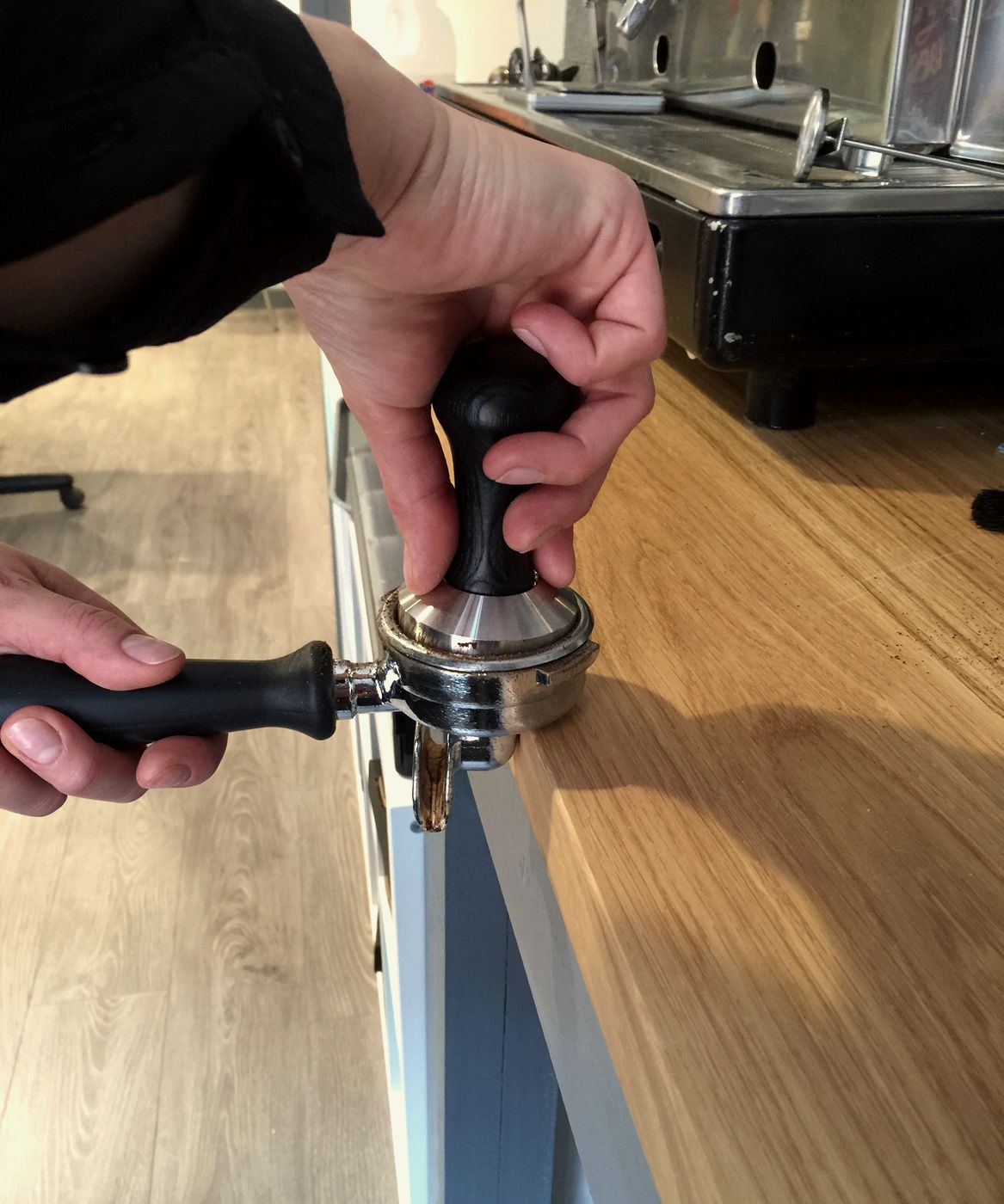
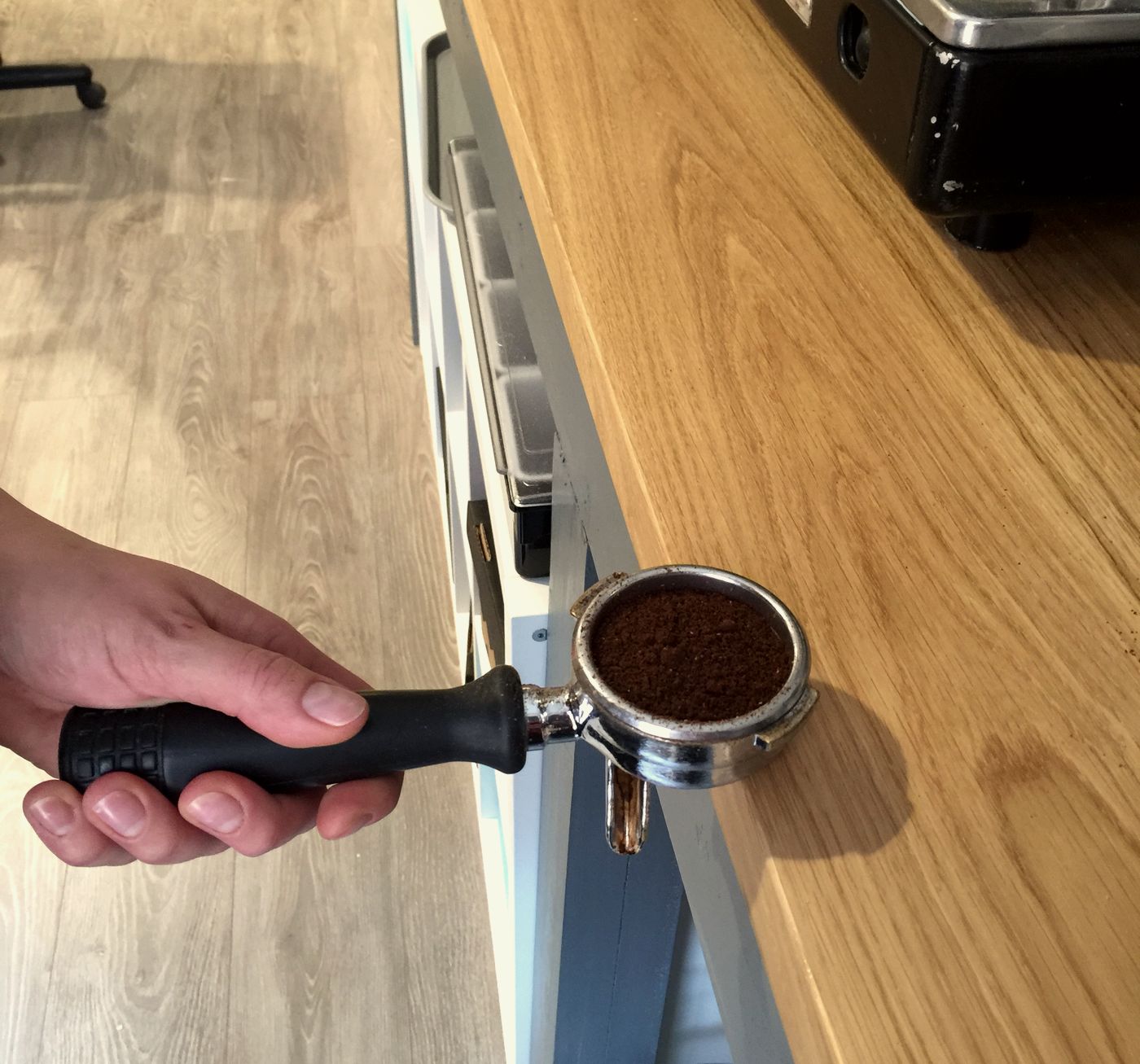
Before you tamp, make sure the coffee is spread evenly across the basket. Then tamp level, with firm, even pressure, using a tamper that fits your basket properly. An uneven bed lets water find the easy path through the coffee, called channelling, and you get a shot that's sour and bitter at once.
Tamp the same way every time. Consistency matters more than force.
5. Watch the time
For a double shot, aim for roughly 25 to 30 seconds. The flow should look steady, a bit like warm honey, rather than gushing or dripping.
Time is a guide, not a rule. Your tongue has the final say:
- Sour, thin, ran fast: go finer.
- Bitter, harsh, ran slow: go coarser.
Change one thing at a time. Keep a note of your grind setting, dose, time and how it tasted. After a week you'll have a recipe that works for your beans and your machine.
6. Steam milk properly
Milk is where most home drinks go wrong. The aim is smooth, glossy microfoam with no visible bubbles, not stiff froth.
- Start with cold milk in a cold jug. Whole milk is the easiest to learn with.
- Purge the steam wand to clear any water.
- Put the tip just below the surface and let it draw in a little air. You should hear a gentle hiss, not a screech.
- Once you have enough foam, lower the tip slightly and angle the jug so the milk spins in a whirlpool. This folds the foam through the milk.
- Stop at around 60 to 65°C. Hotter than that and the milk loses its sweetness. If you don't have a thermometer, stop just as the jug gets too hot to hold comfortably.
- Tap the jug on the counter to knock out any bubbles, then swirl it so the milk stays glossy.
Plant milks behave differently from dairy, and almond, soya and coconut each have their own quirks. If you use one, expect to adjust how much air you add.
7. Pour with intent
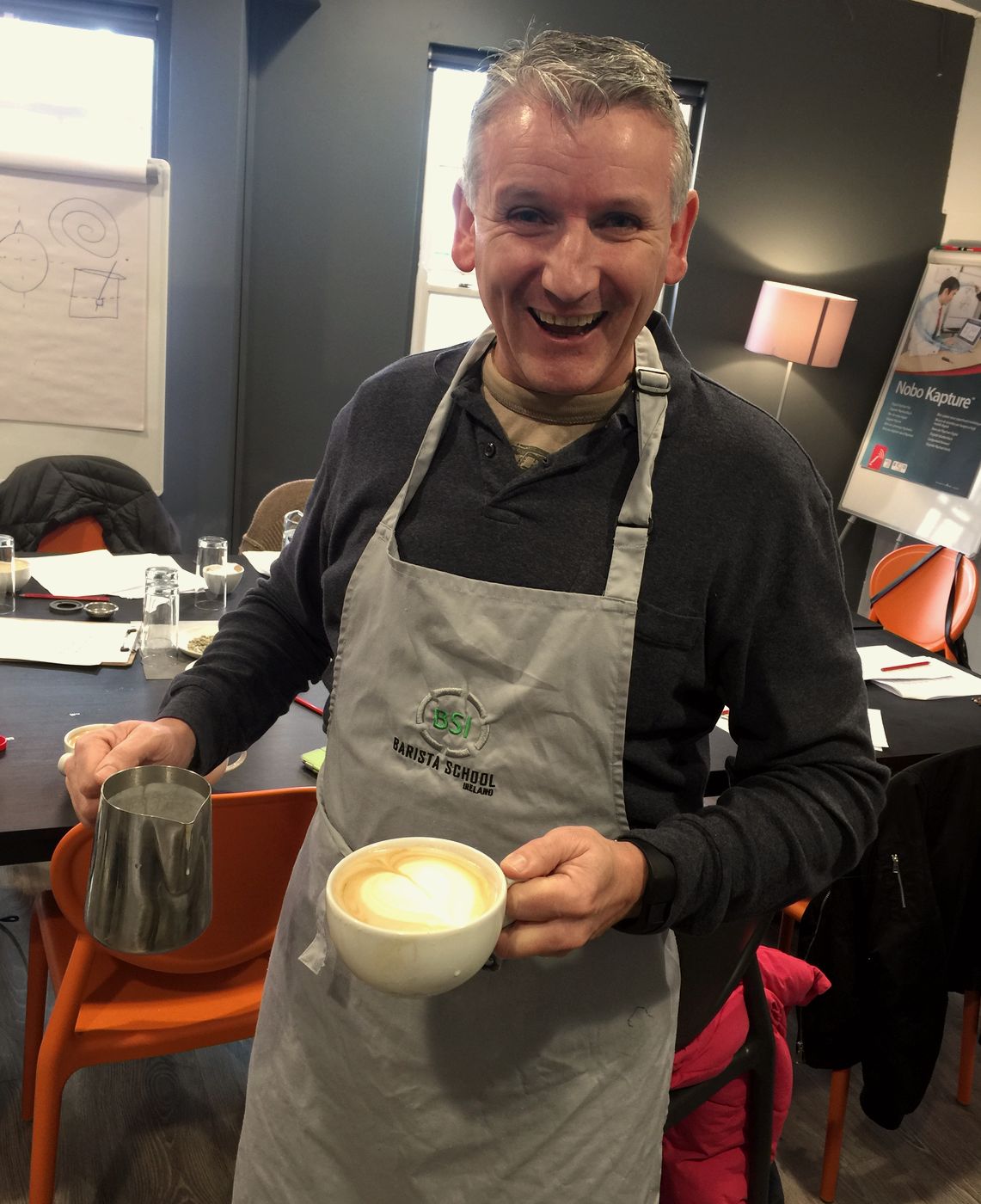
Latte art isn't just decoration. If you can pour a clean heart, it means your milk texture and your espresso are both right. Start with the heart, then the rosetta and the tulip. Pour from a little height to start so the milk sinks under the crema, then bring the jug close to the surface to let the pattern form.
8. Keep everything clean
Old coffee oil and milk residue make fresh coffee taste stale and bitter, however good your technique is.
- Wipe and purge the steam wand after every use.
- Rinse the portafilter and wipe the group head after each shot.
- Clean the grinder regularly.
- Follow your machine's instructions for backflushing and descaling.
When to get help
You can learn a lot on your own, but a few hours with a trainer watching every shot will save you weeks of guesswork. Our Barista Workshop suits home coffee lovers as much as people working in cafés. It's one full Saturday in Bandon, €159, in a class of five, with coffee and milk for 70+ lattes between you, so you get plenty of time on the machine.
If milk and pouring are your main frustration, the Latte Art Masterclass is two intensive hours for €75, almost all of it on the machine: perfect your milk, then your pour. Both come with notes to take home and four weeks of email support, so you can ask us when something goes wrong at your own machine.
A course also makes a good present. Gift vouchers from €25 to €500 work on any course and are valid for five years.
See dates and book when you're ready.