Why Does My Espresso Taste Sour or Bitter? A Practical Fix-It Guide
You've bought the machine, you've bought good beans, and the coffee still tastes wrong. Some days it's sharp and sour. Other days it's harsh and bitter. We hear this a lot from people who come to us in Bandon, and the good news is that it's usually fixable at home.
Here's how we'd work through it.
Start with what you're tasting
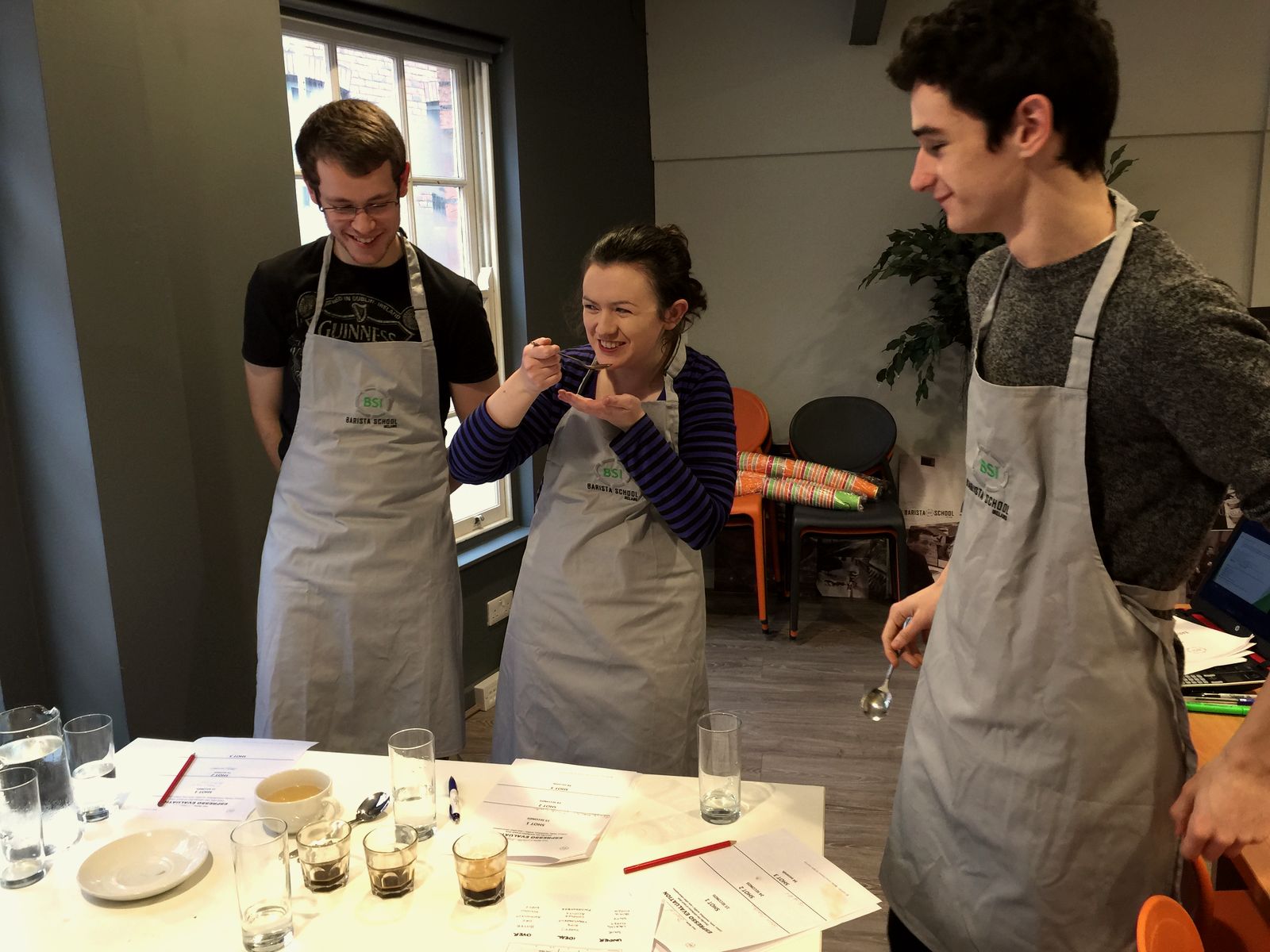
Before you change anything, taste the shot properly and decide which way it's going wrong.
- Sour usually means sharp, thin and a bit salty, and it often runs through quickly. This generally points to under-extraction: the water hasn't pulled enough out of the coffee.
- Bitter usually means harsh and drying, with a taste that hangs around. This generally points to over-extraction: the water has pulled too much, often because it ran through too slowly.
Knowing which one you have tells you which direction to adjust.
Change the grind first
Grind size is the biggest lever most home baristas have.
- If it's sour and running fast, go finer.
- If it's bitter and running slow, go coarser.
Make small adjustments and pull a fresh shot each time. The most important rule is to change one thing at a time. If you change the grind, the dose and the beans all at once, you'll never know what fixed it.
Weigh your coffee
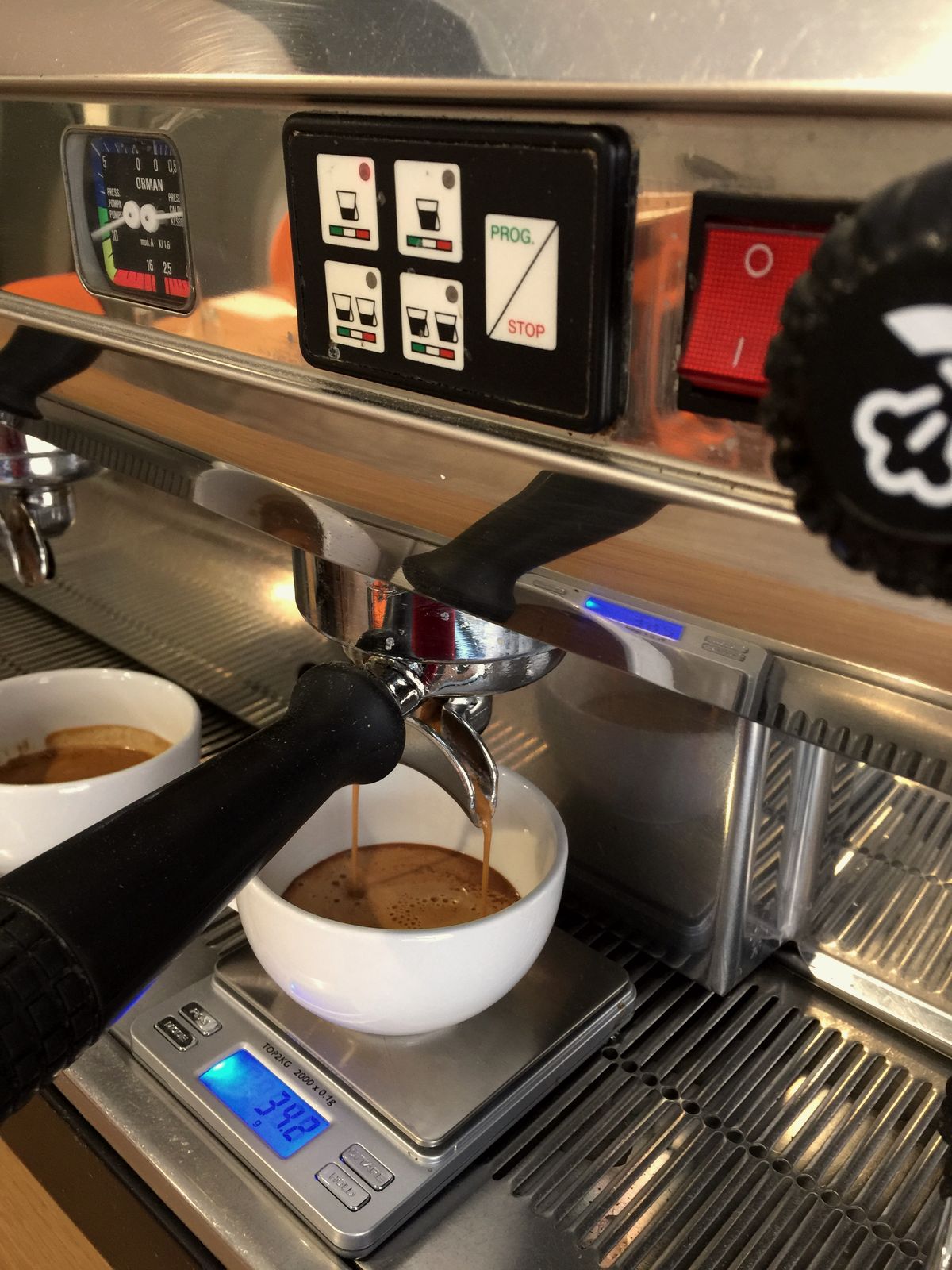
If you're scooping by eye, every shot is a slightly different recipe. A cheap kitchen scale that reads to a tenth of a gram makes a big difference.
Weigh the ground coffee going into the basket, and weigh the espresso coming out. A common starting point is roughly twice as much liquid espresso as dry coffee by weight. Treat that as a place to start, not a rule.
Once your dose is consistent, your grind adjustments start to mean something.
Check how fresh your beans are
Coffee changes as it ages after roasting. Beans that have been open for weeks often taste flat, and they can be harder to dial in.
Buy smaller bags more often, keep them sealed and away from heat and light, and grind just before you brew. Pre-ground coffee goes stale faster, and you can't adjust the grind to suit your machine.
Distribute and tamp evenly
If the coffee in the basket is lumpy or tamped at an angle, water finds the easy path through. Part of the puck ends up over-extracted and part under-extracted, so you can get sour and bitter in the same cup.
To avoid this:
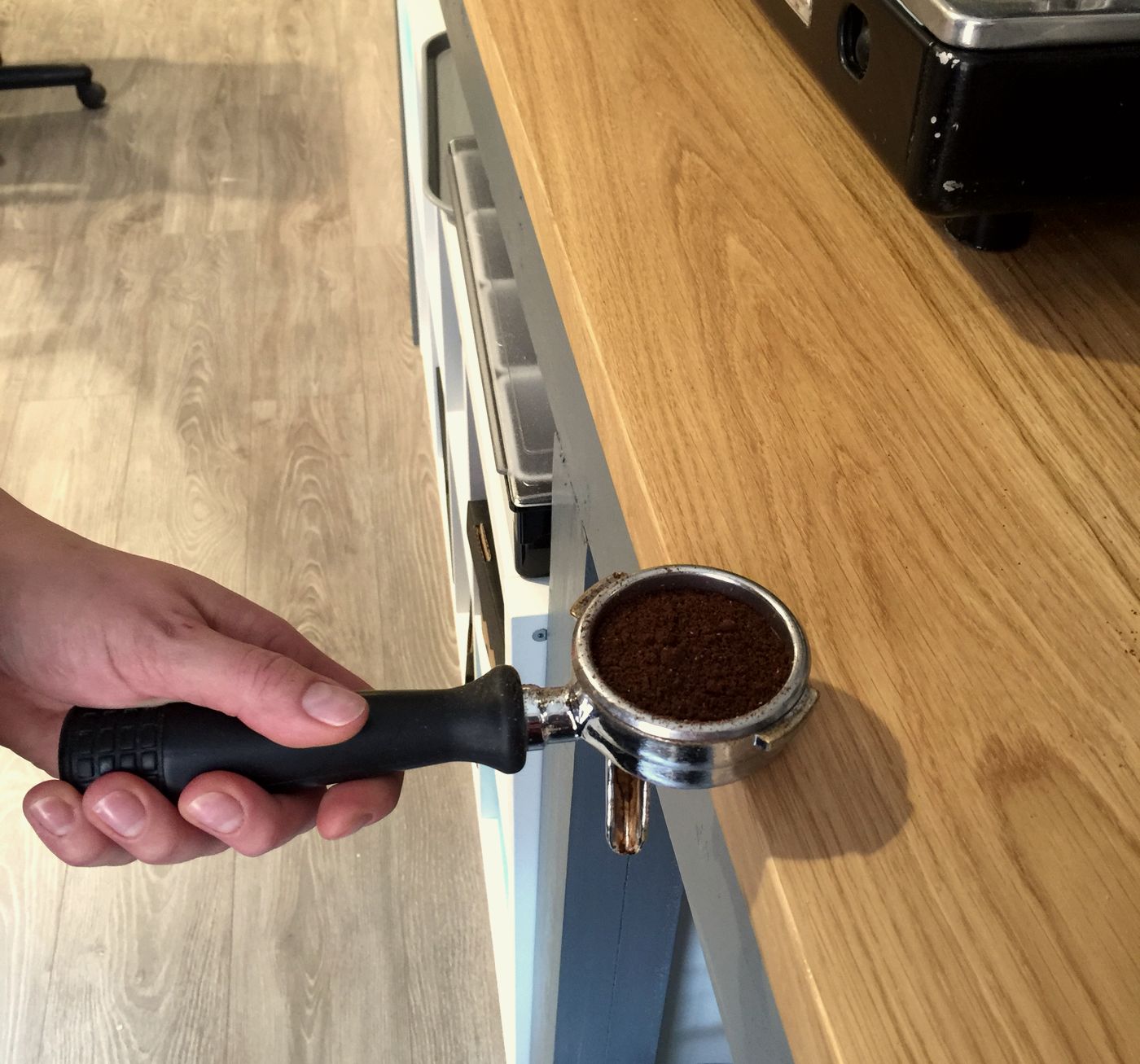
- Break up clumps and level the bed before you tamp.
- Tamp straight and firmly.
- Try to do it the same way every time.
Consistency matters more than force.
Keep the machine clean and warmed up
Old coffee oils in the group head, the basket and the portafilter can make everything taste bitter and stale.
- Rinse the group head between shots.
- Wipe the basket dry before dosing.
- Backflush and descale as your machine's manual recommends.
Let the machine heat up fully before your first shot. A cold portafilter or group head can make that first shot taste noticeably off.
Don't forget the milk
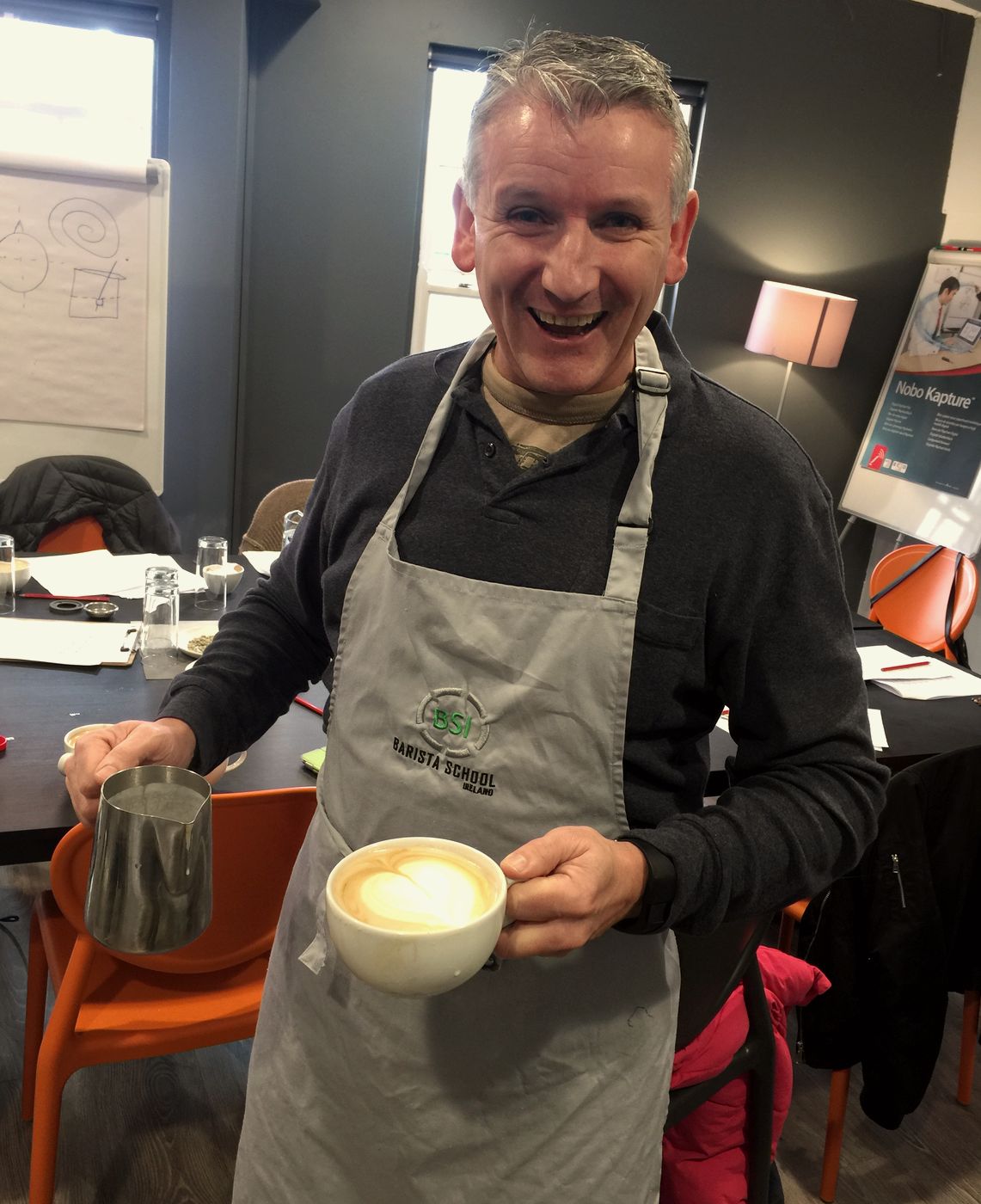
If you're making lattes or flat whites, the problem might not be the espresso at all. Milk that's overheated loses its sweetness and can taste flat or slightly burnt.
Aim for milk that's hot but comfortable to hold the jug, and stop before it gets too hot to touch.
When it helps to have someone beside you
A lot of this is easier to learn by doing than by reading. Seeing what a good shot looks like as it pours, feeling the right tamp, and hearing milk steam properly all make sense much faster with hands on a machine.
That's what our one-day Barista Workshop in Bandon is for. It suits home enthusiasts as well as people starting in a café. We cover machine and grinder set-up, perfecting espresso, steaming milk and latte art in a small group, and you get four weeks of email support afterwards for when you're back at your own machine. You can see open dates and book online here.
In the meantime, grab a scale, change one thing at a time, and taste everything.